An imaginative, inspiring playground with a universal appeal that is accessible and inclusive: The Sturgeon Playground in New York.
New York City: The Sturgeons Science Playground
Also published in: Tsport 367
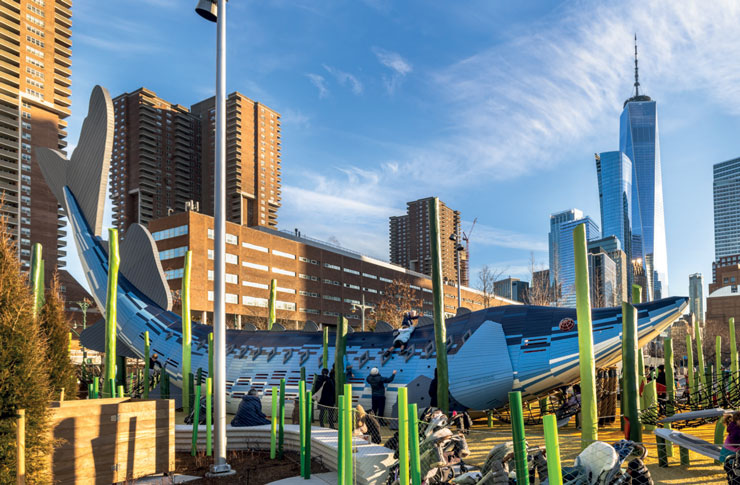
A high-impact playground in New York, with installations custom-designed for the site, made to stimulate the imagination and promote inclusion. This is the philosophy of the design group Monstrum, founded in 2003 by Ole Barslund Nielsen, which creates highly expressive playgrounds all over the world and then allocates 10% of annual profits to socially useful work.
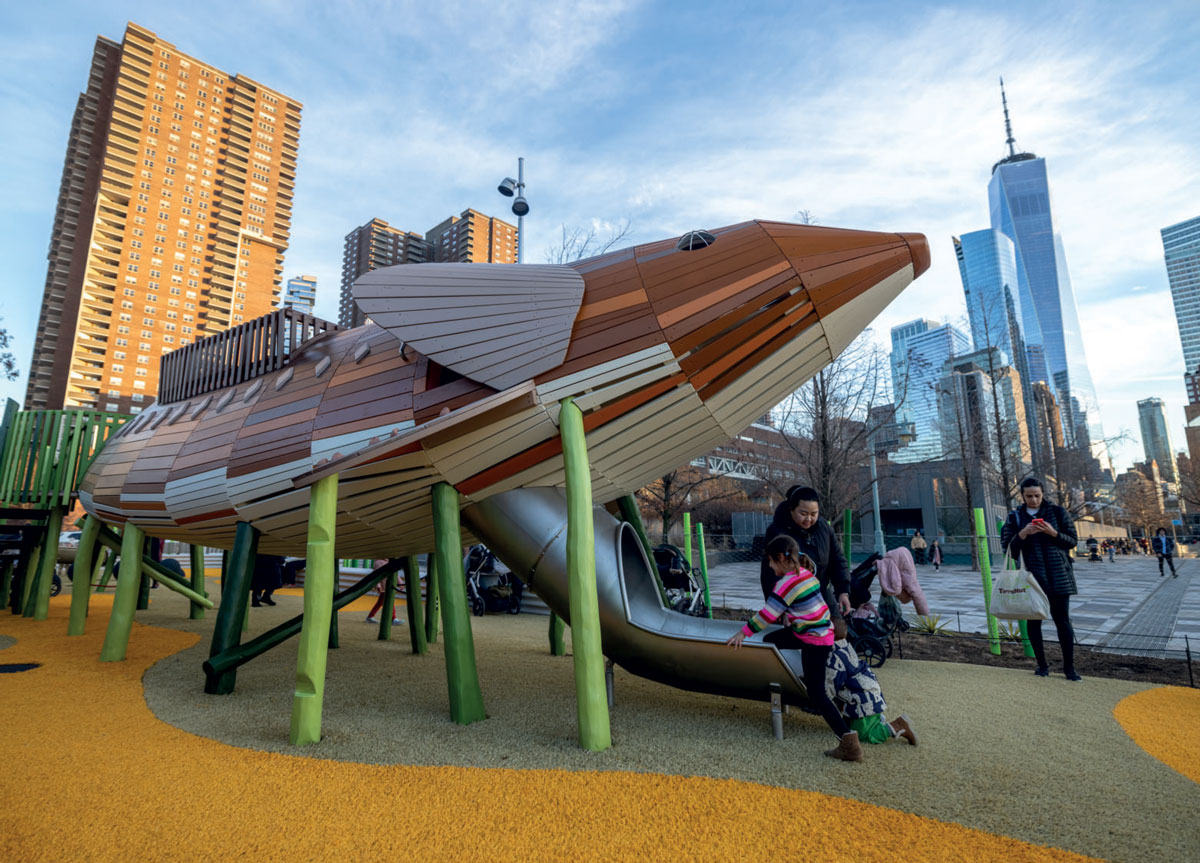
The Science Playground at Hudson River Park’s Pier 26 is home to two larger-than-life sturgeons, that stretch up amongst the surrounding skyscrapers and are packed with fun learning opportunities!
Immerse yourself in the marine life of the Hudson River through these highly interactive play features, that invite and inspire children to explore and learn. The 24-meter-long creatures can be scaled on the outside and inside, kids can journey through these endangered fish, learning about their anatomy, habitat and nature as they play.
The sculptures of the playground in New York represent an Atlantic sturgeon and a shortnose sturgeon and are designed in collaboration with OLIN and The Hudson River Park Trust.
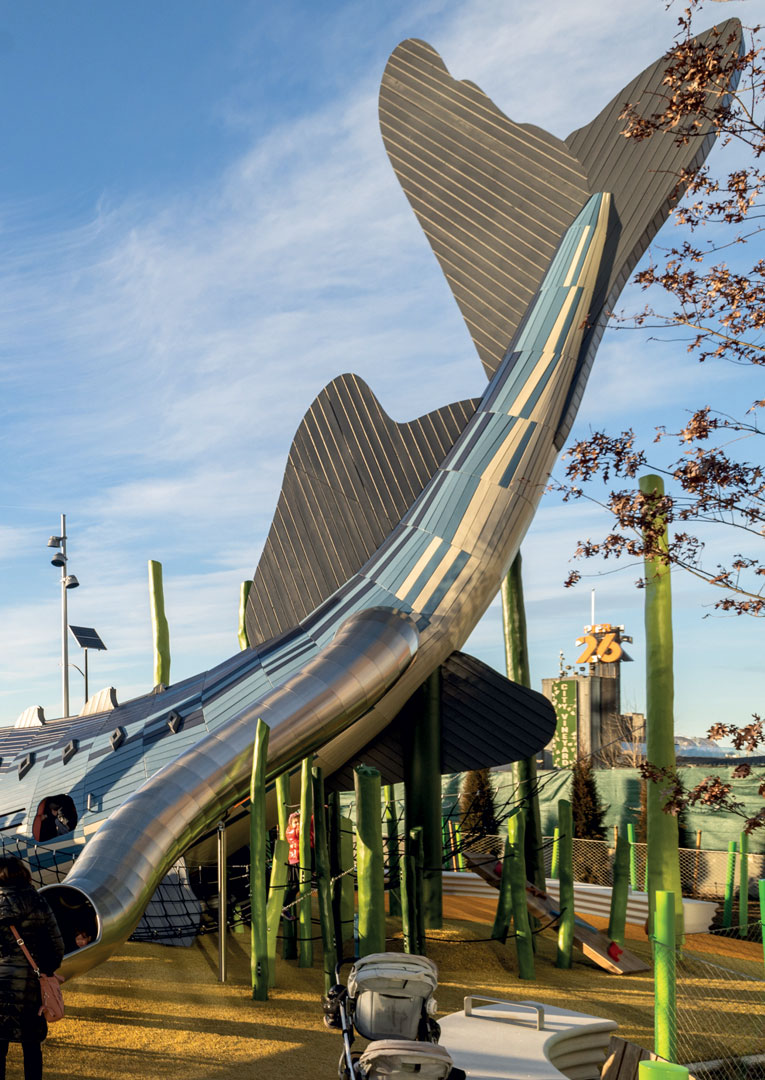
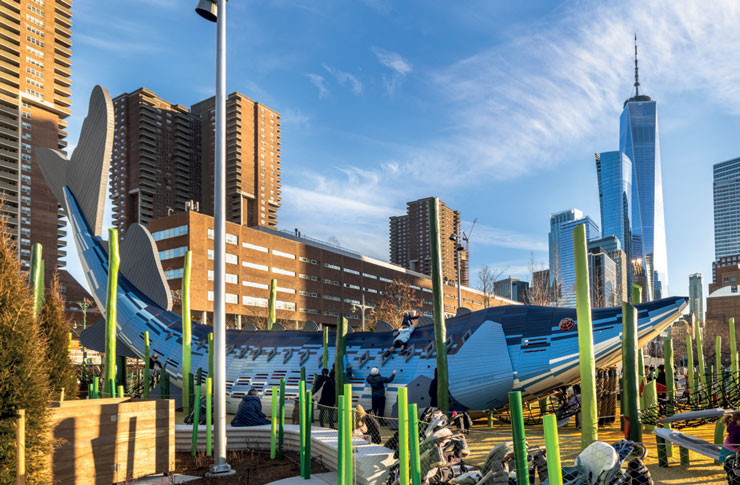
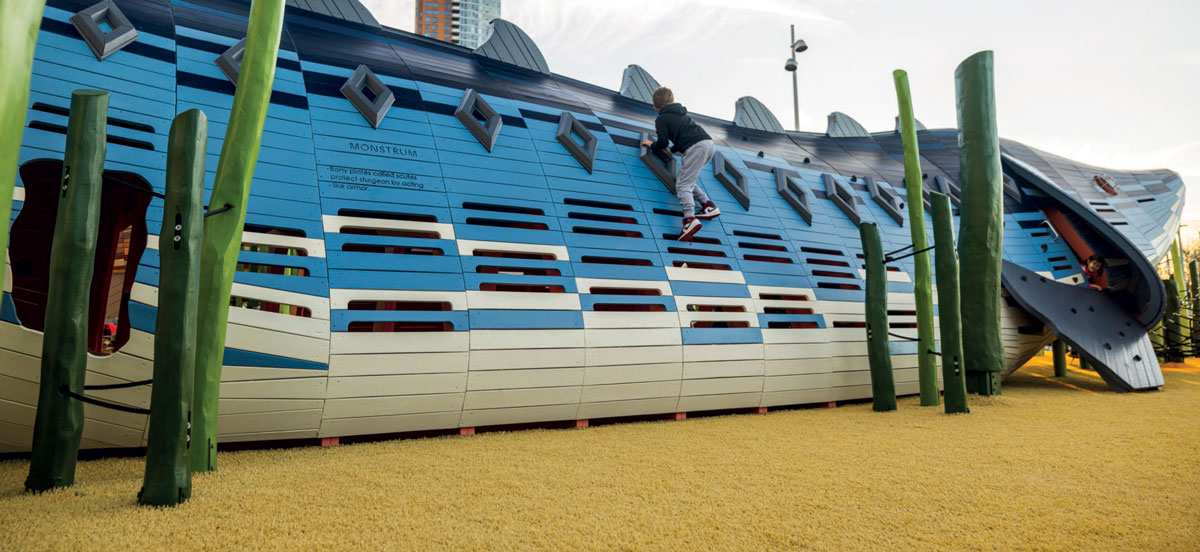
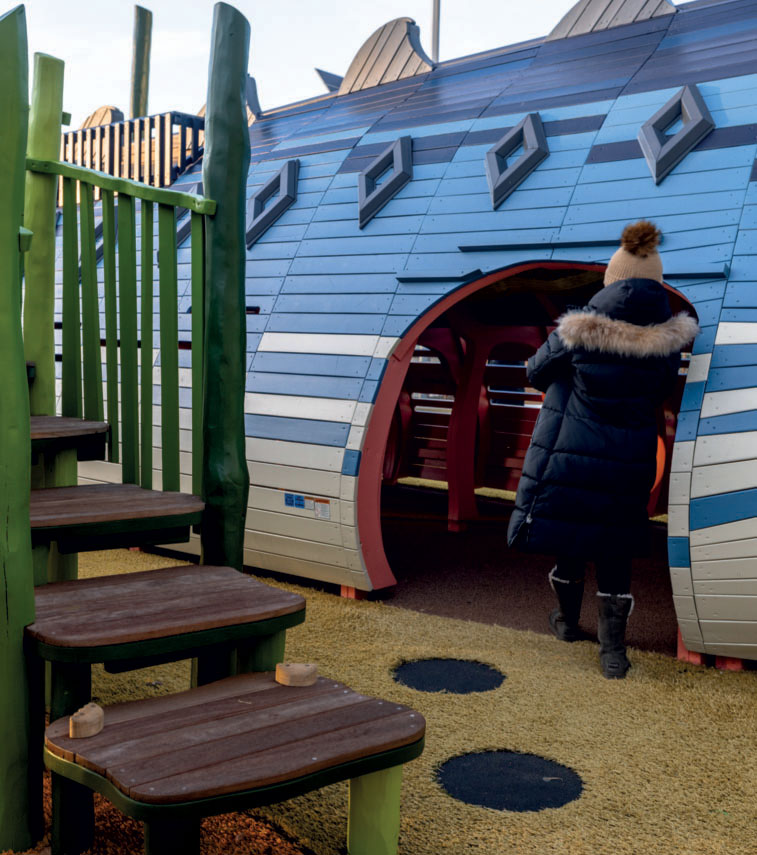
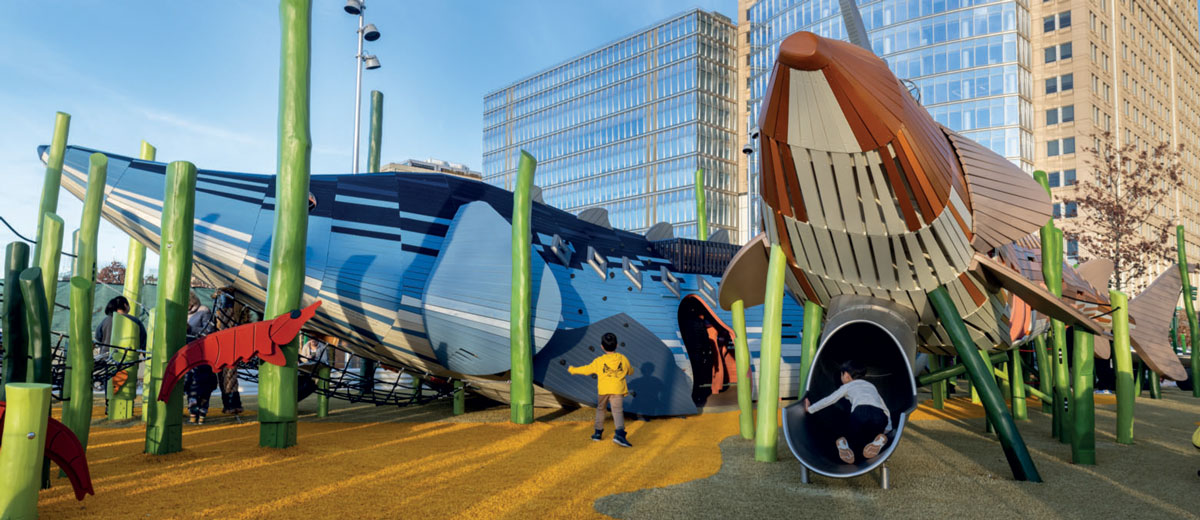
Throughout the design process, great importance was placed on aesthetic appeal, partly to create sculptural and striking elements within the urban landscape, but also to design play structures that would capture children’s attention—regardless of their abilities or challenges—and inspire them to become part of the adventure.
The two structures are designed with multiple access points and varying levels of difficulty for the climbing routes inside. The large Atlantic sturgeon is accessible to wheelchair users via a ground-level opening and incorporates ramps with handrails inside to allow those with limited mobility to climb and crawl up to the slides.
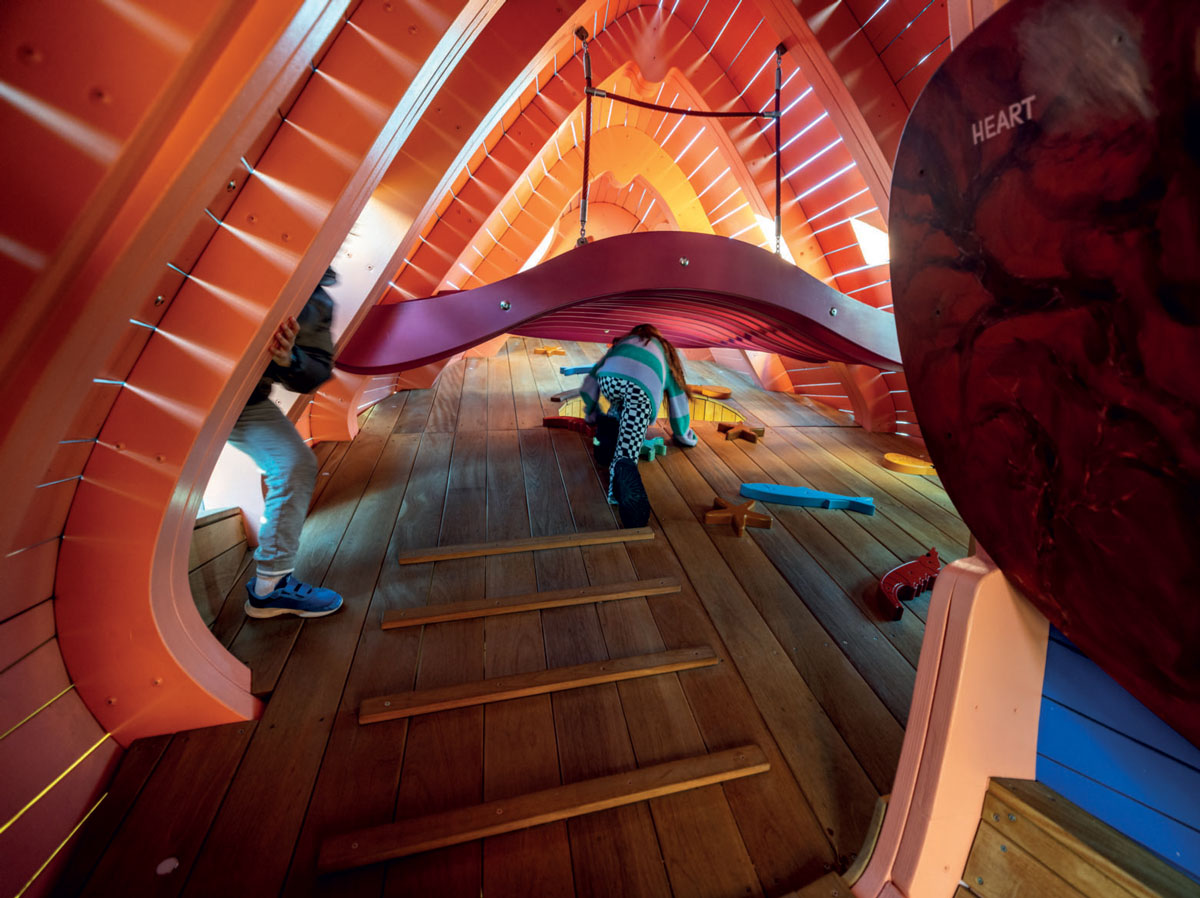
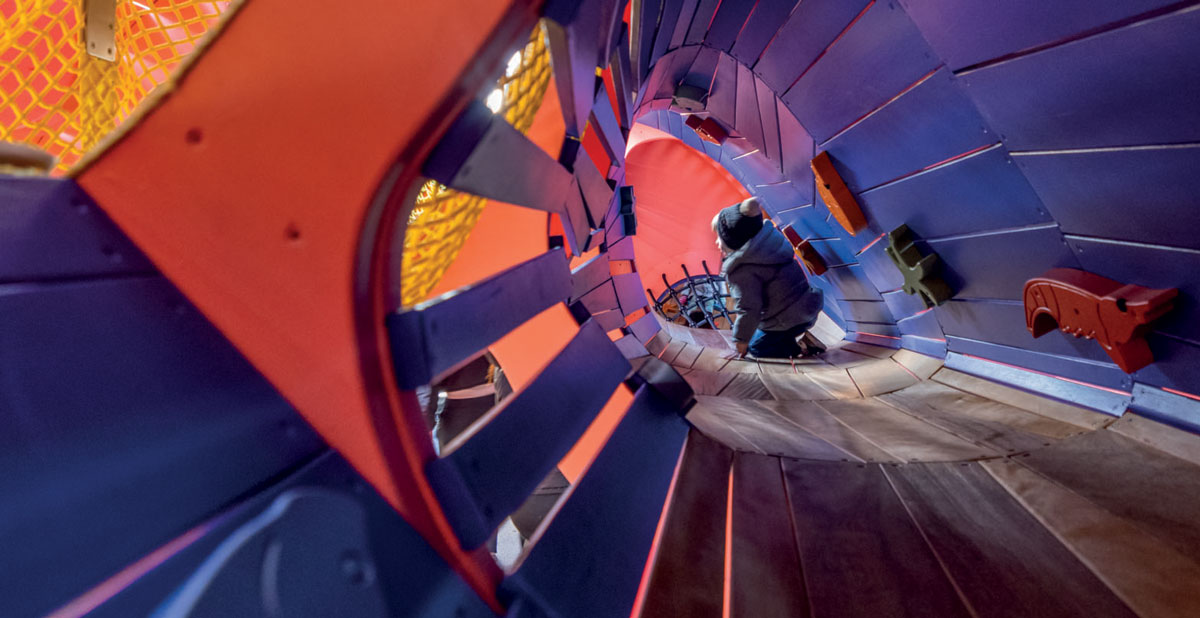
Both fish are designed with multiple accessible features, such as sensory elements, ramps, steps, and transfer platforms, which help facilitate hours of play for children and their families.
The playground will serve as an extension to the future Hudson River Park Estuarium, planned to be built here.