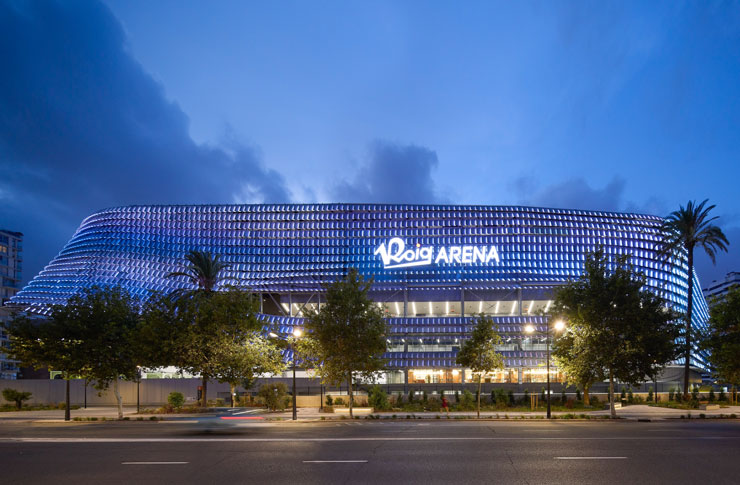
The old facility, now known as Claro Arena, has been transformed into a technologically advanced, multipurpose, and environmentally friendly stadium. The project preserves the original structure and adds a lightweight, permeable outer shell that provides sun protection, natural ventilation, and sound insulation.
Santiago, Chile: the new Claro Arena
Also published in: Tsport 369
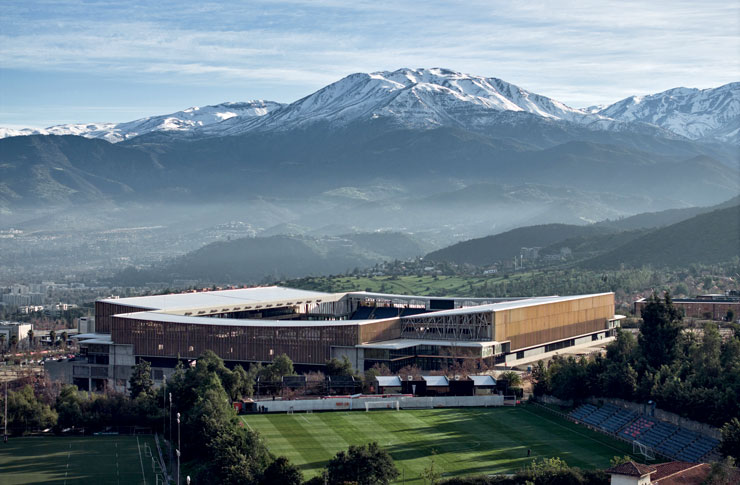
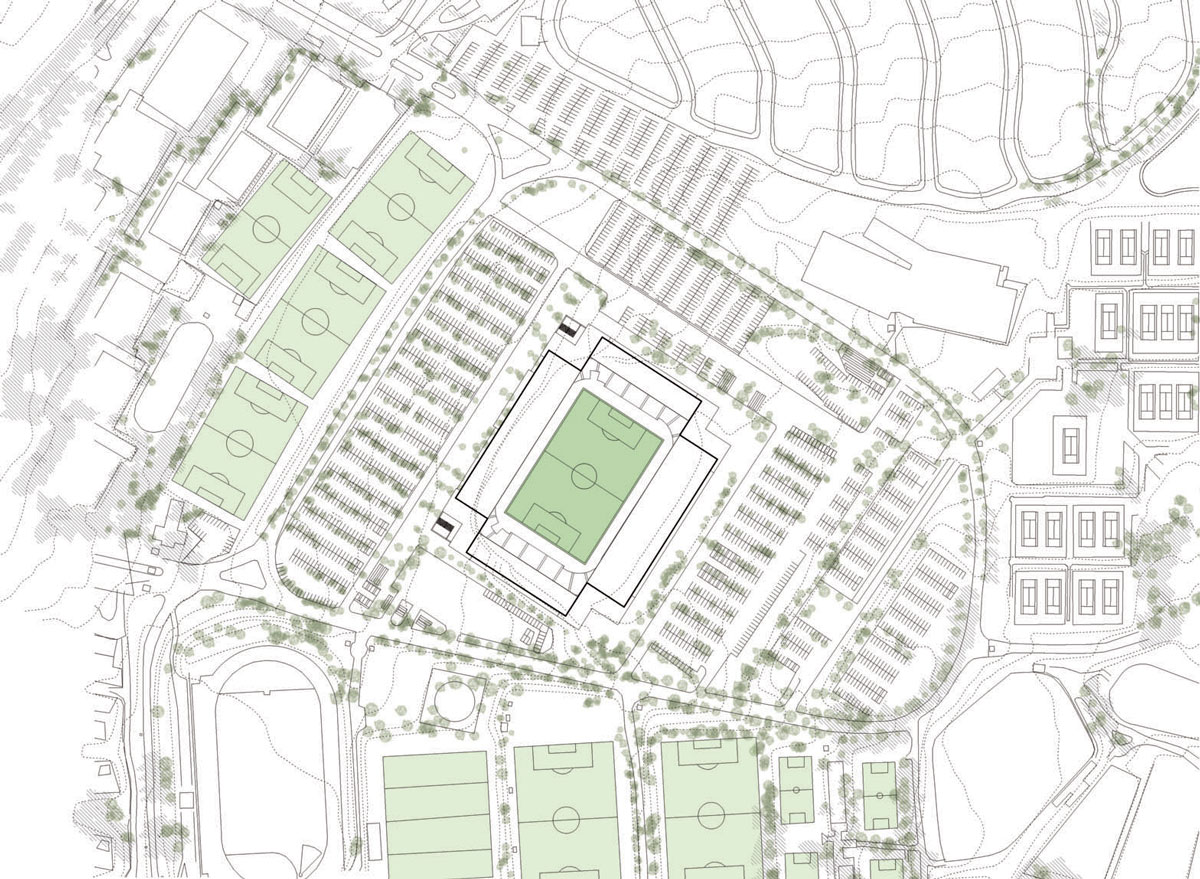
The Claro Arena, formerly the San Carlos de Apoquindo Stadium, opened in 1988 in Las Condes, Santiago, Chile. It is located on a sloping site between the mountains and Manquehue Hill. The stadium’s original design was partially buried and featured differentiated access between the east (Fouilloux) and west (Livingstone) stands.
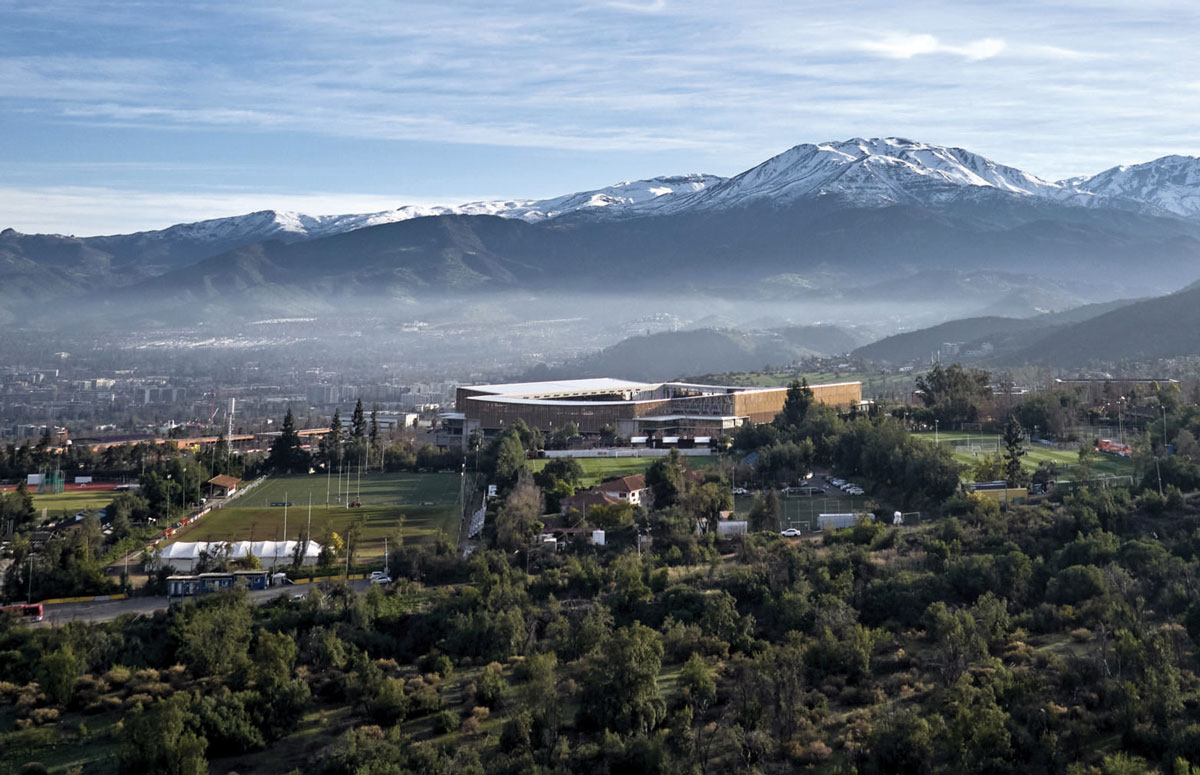
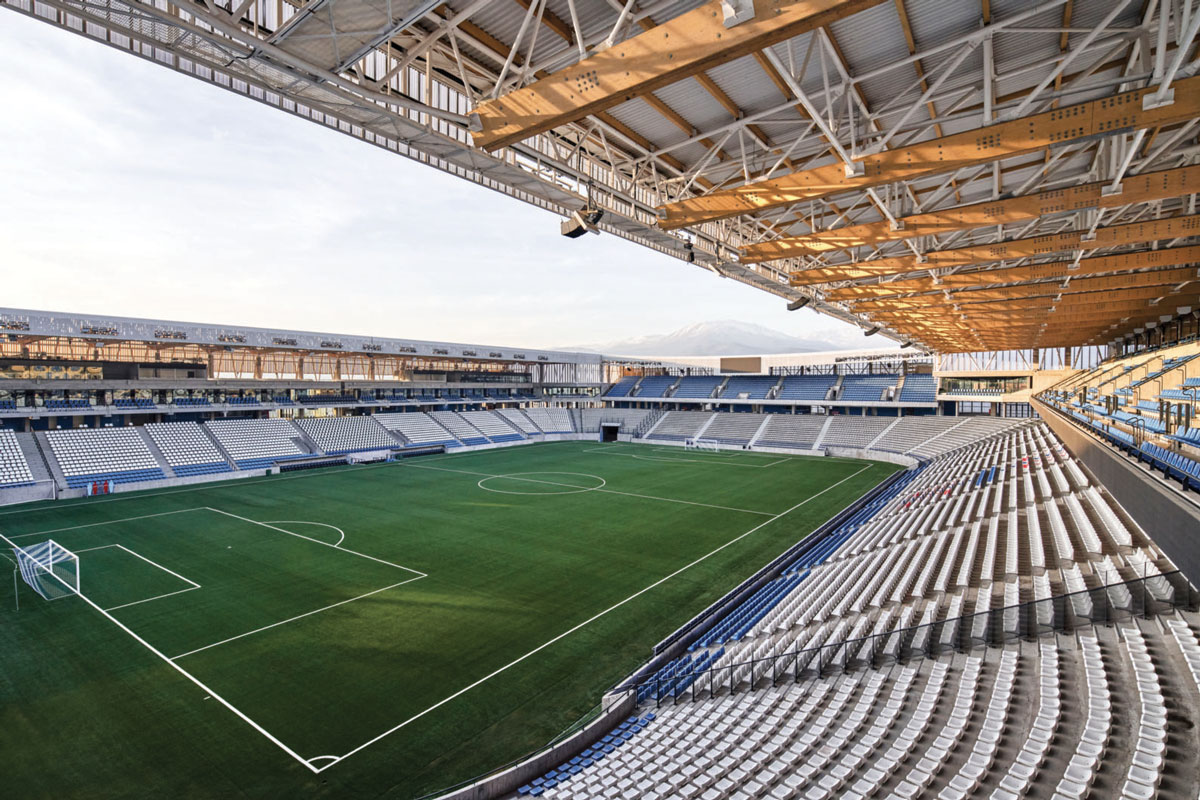
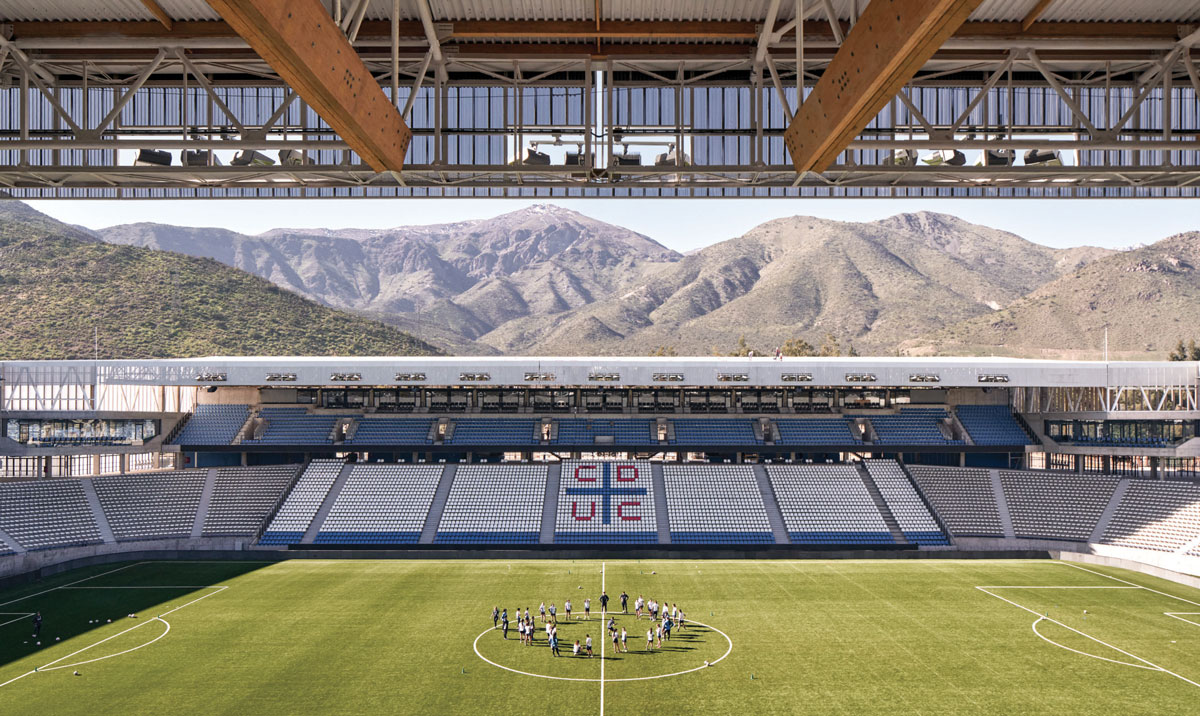
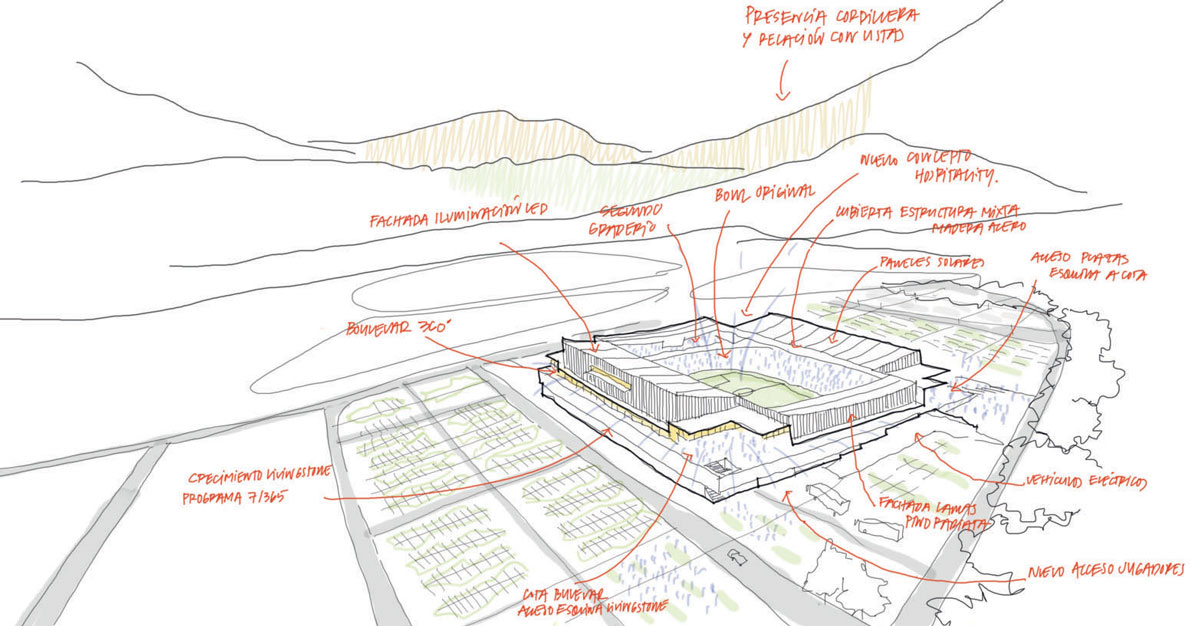
In order to expand the capacity from 12,000 to 20,000 spectators and modernize the venue, a competition was launched to transform the stadium into a multipurpose, sustainable, technologically advanced space. The new design by IDOM for Claro Arena preserves the original stands and adds a 360-degree perimeter boulevard that connects all areas. Above this, a light, permeable structure houses the extension.
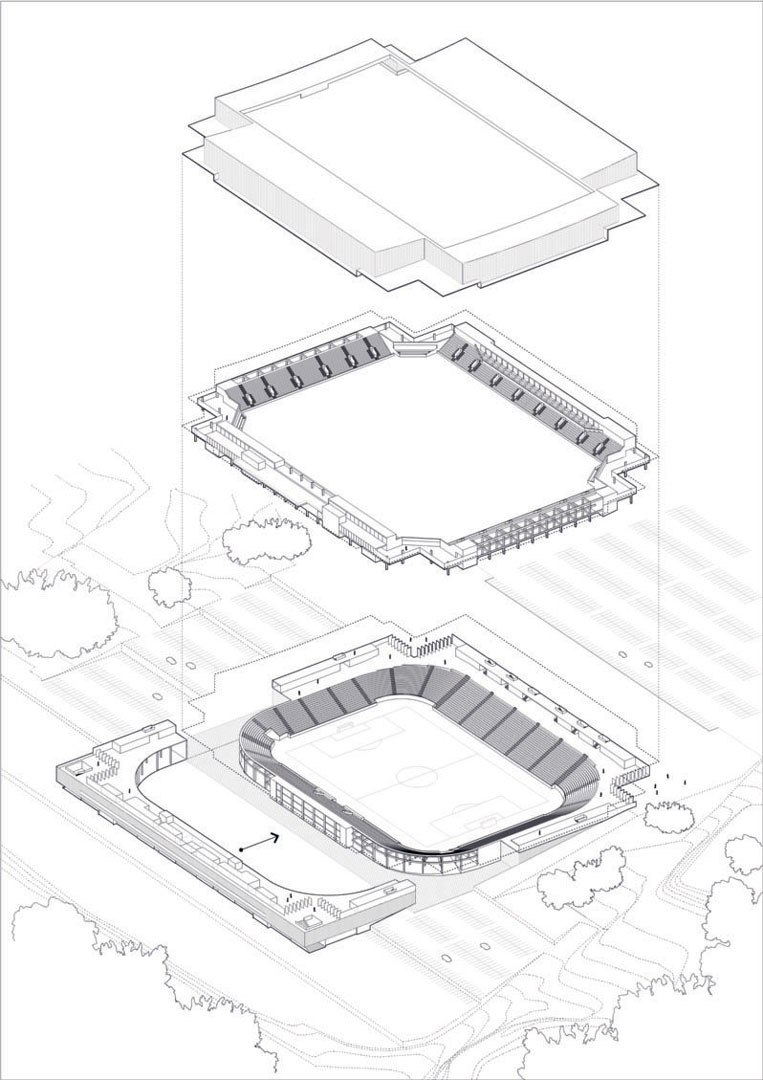
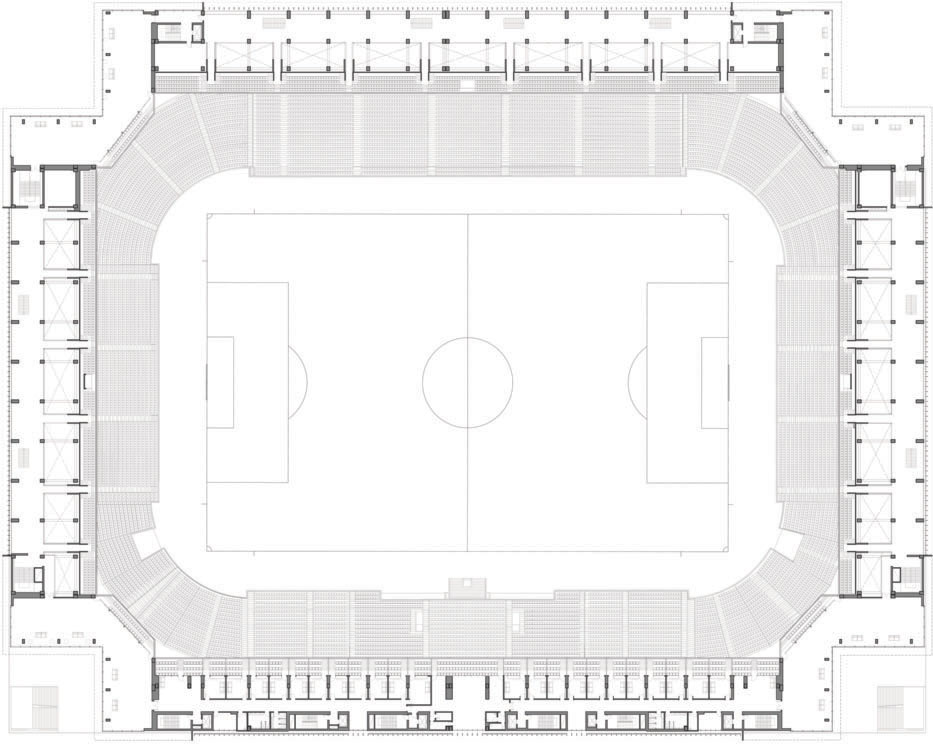
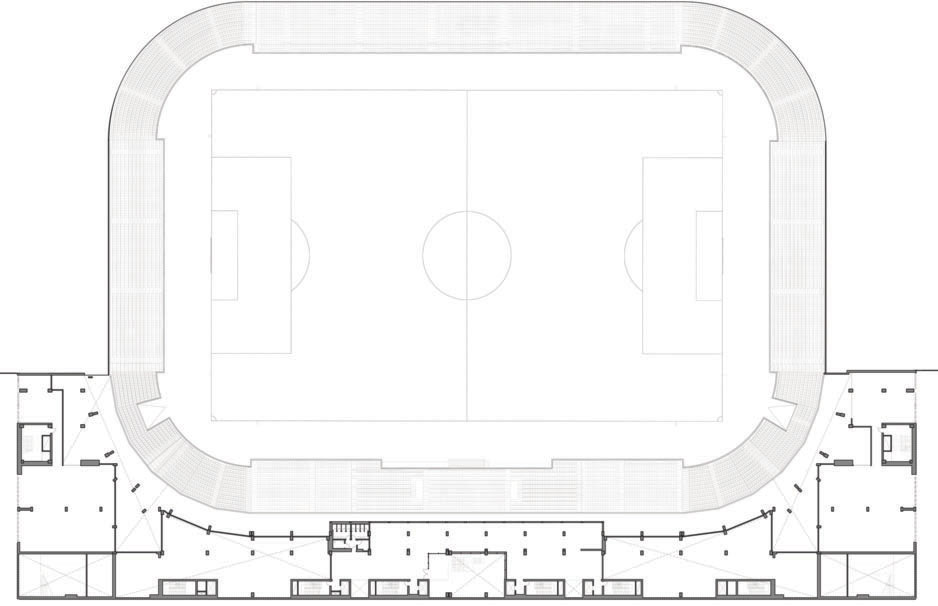
This section illustrates the process. While keeping the current stands practically intact, a continuous horizontal plane is formed, creating a 360° boulevard that provides access to both stands. The old stadium is anchored to the ground beneath this boulevard, and the extension with a lighter and more permeable structure rises above it.
The rectangular floor plan and work on the corners define the complex’s geometry.
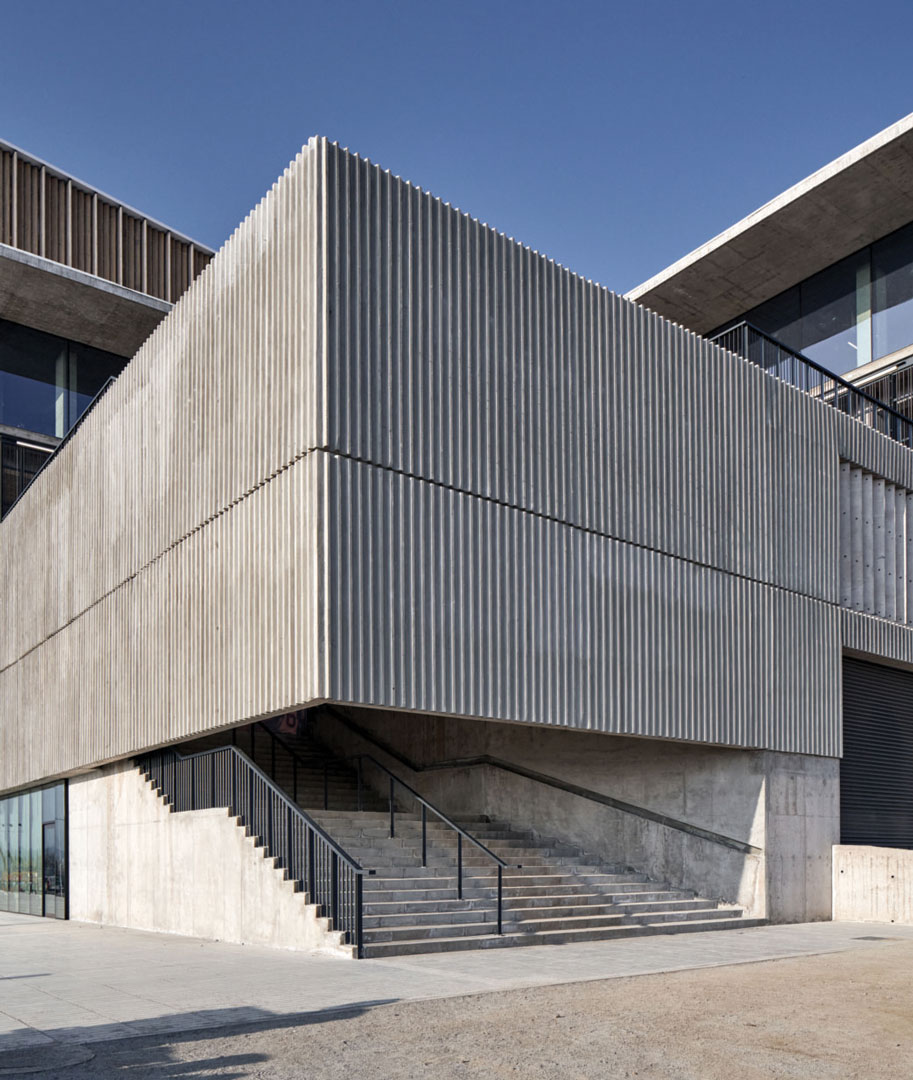
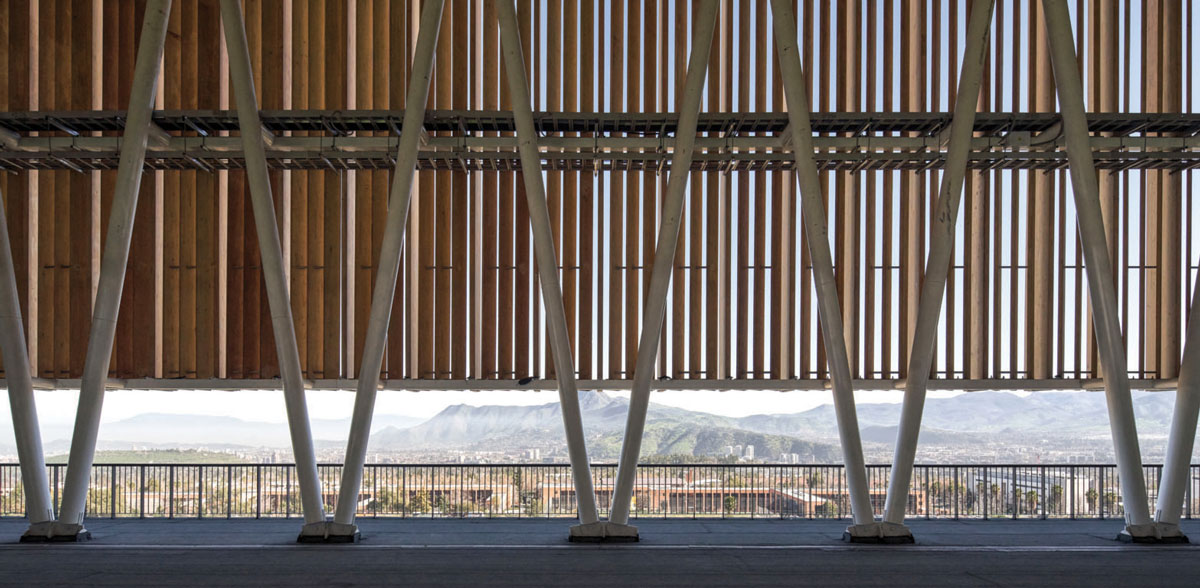
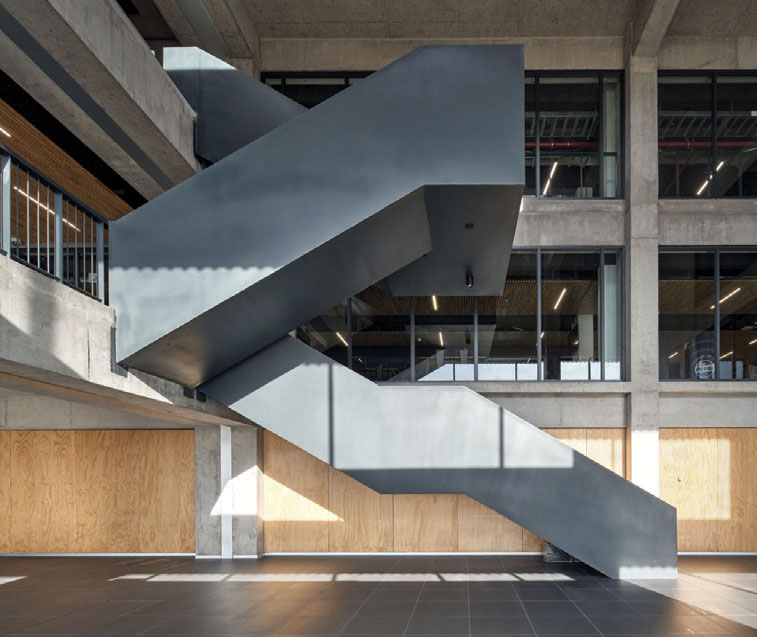
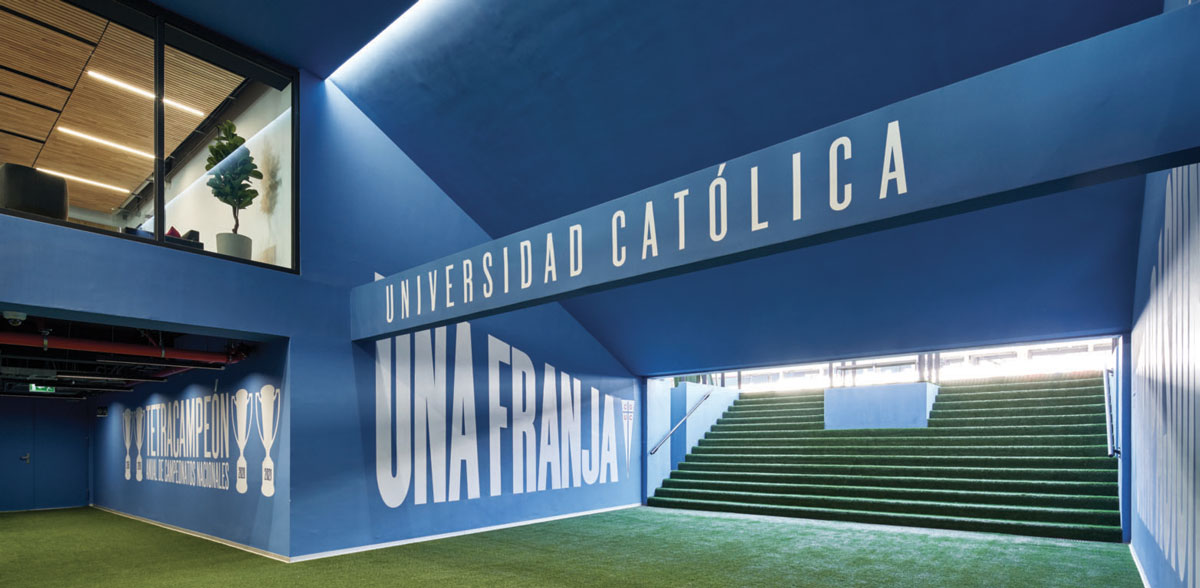
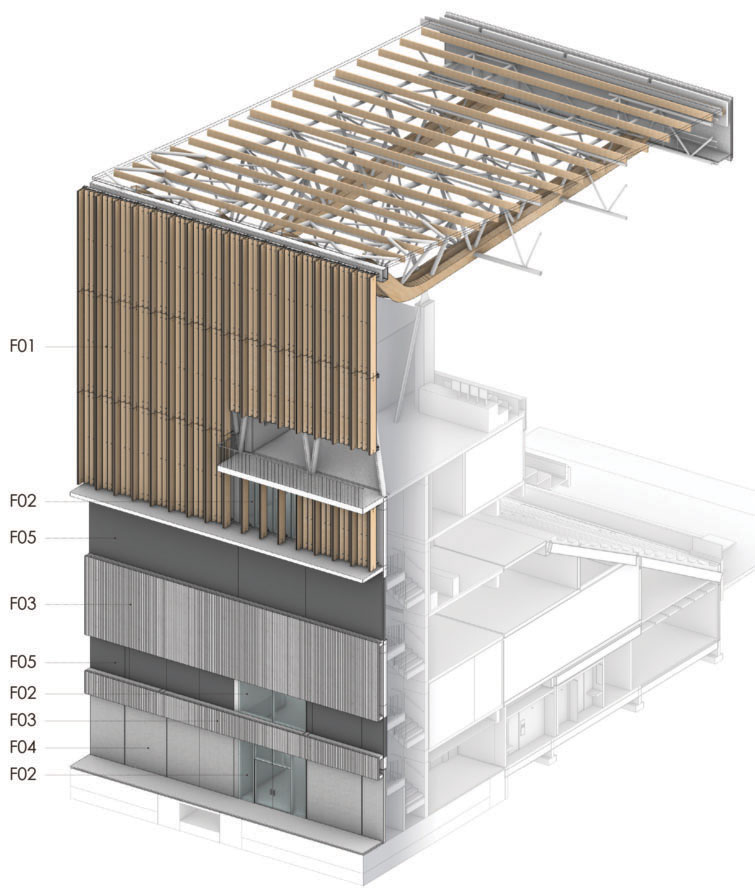
The concrete structure of the original stadium has been preserved, and a second reinforced concrete grandstand has been built on top of it, along with a 31-meter-long roof made of a mixed steel and wood structure and a wooden slatted enclosure.
Principles of reduction, reuse, and recycling have been applied in terms of sustainability, notably the use of 1,600 m³ of Chilean wood that captures more than 1,500 tons of CO₂, as well as the concept of circularity and active industry participation in the design.