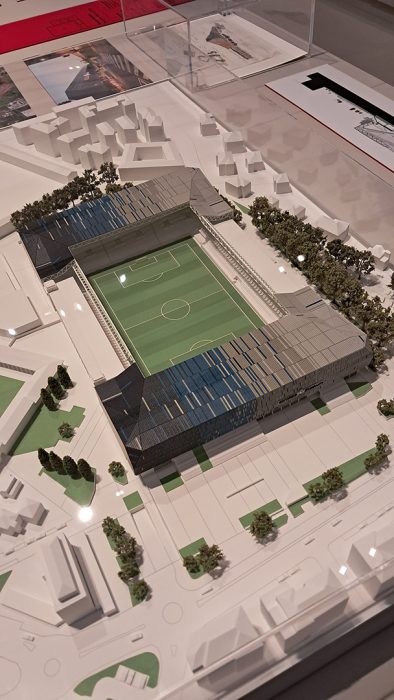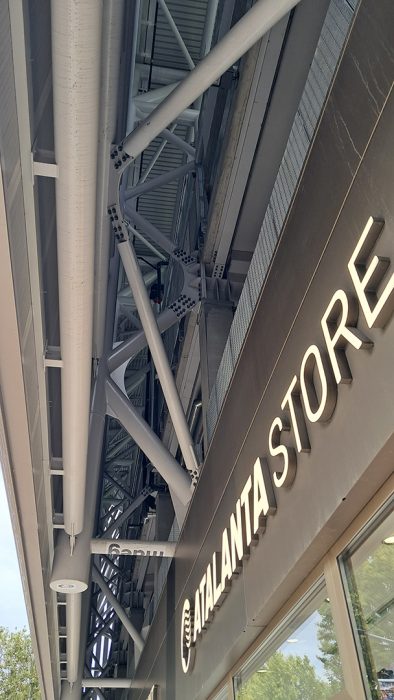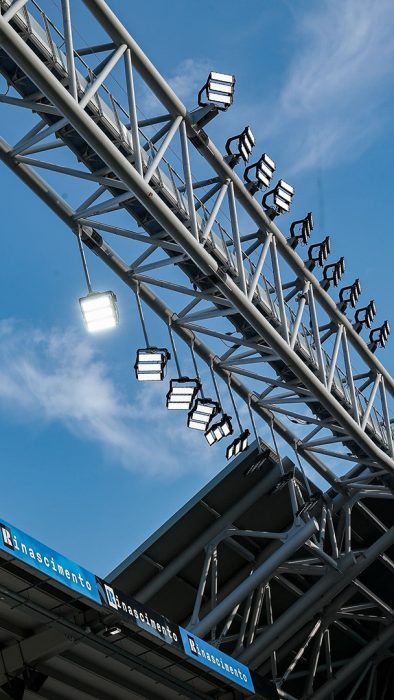

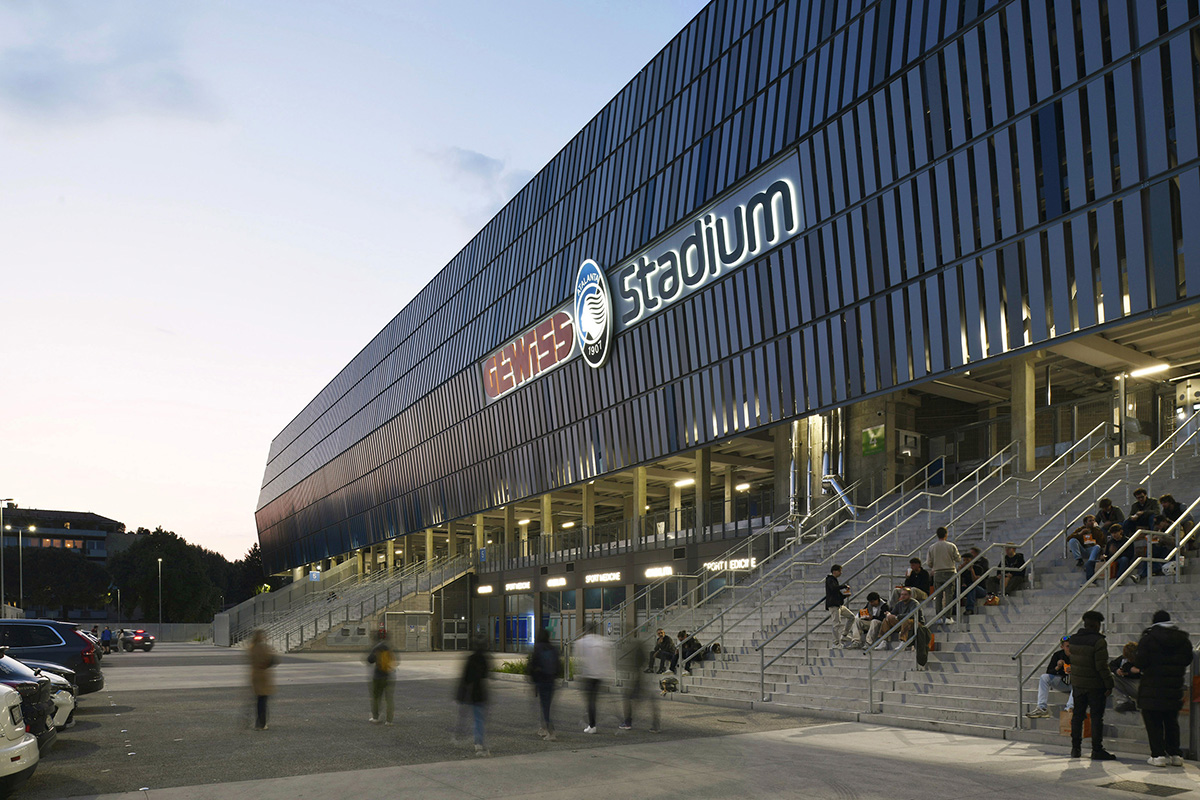
The stadium in Bergamo, home to Atalanta’s home matches, has just completed its latest transformation, while remaining in the same location it has occupied for almost a hundred years. The architects at Studio De8 designed the transformation, carried out in stages between 2019 and 2024, working on the idea of integrating the stadium with the city by transforming the boundary between the two into a permeable and lived-in edge.
Bergamo and Atalanta: the Stadium in the City
Also published in: Tsport 365
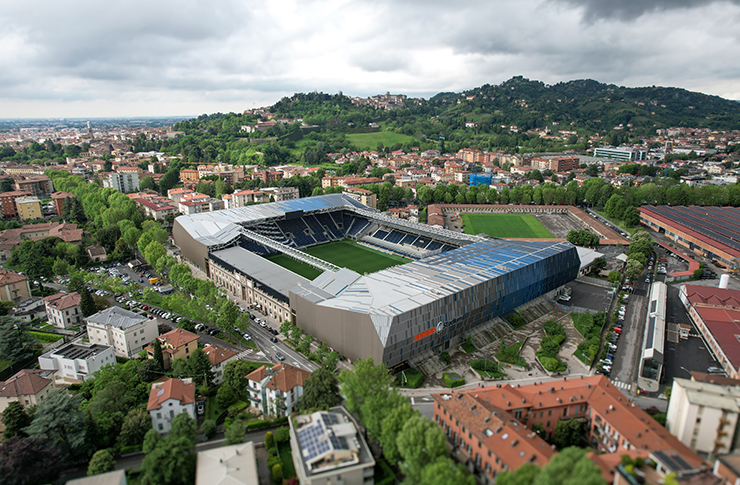
(Photo courtesy of Atalanta BC)
The design concept stems from the desire to move beyond the image of the stadium as a mere technical infrastructure or oversized object, and to rediscover its urban role. The starting point is the 1928 structure, an expression of early twentieth-century civic architecture: its renovation became an opportunity to regenerate a fragment of the city.
The project is based on the idea of bringing the stadium back into the city and into the neighborhood, transforming a boundary into a threshold — from an excluded zone to an accessible, porous, urban place.
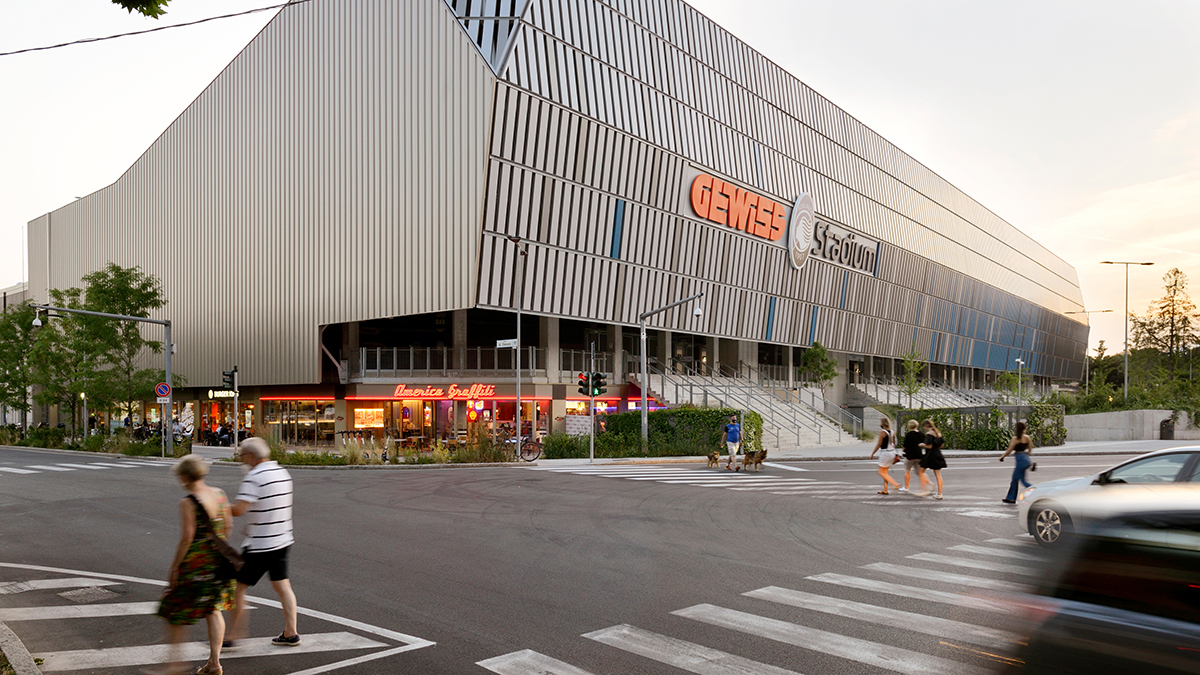
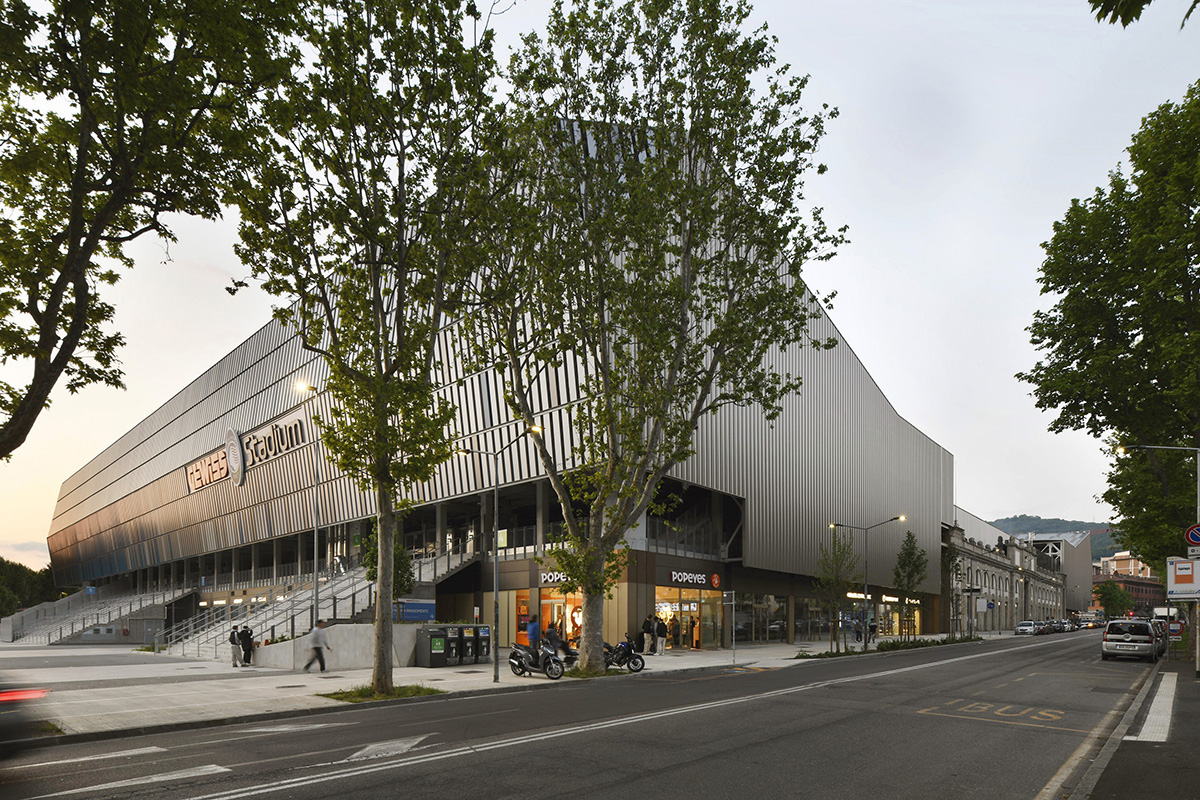
The stadium is part of a landscape of large courtyard buildings — such as the Lazzaretto and the adjacent factory — but also reconnects with the Upper Town and surrounding hills, reweaving historic and urban geographies.
Though a private initiative, the project has a strong public dimension in terms of scale, impact, and accessibility.
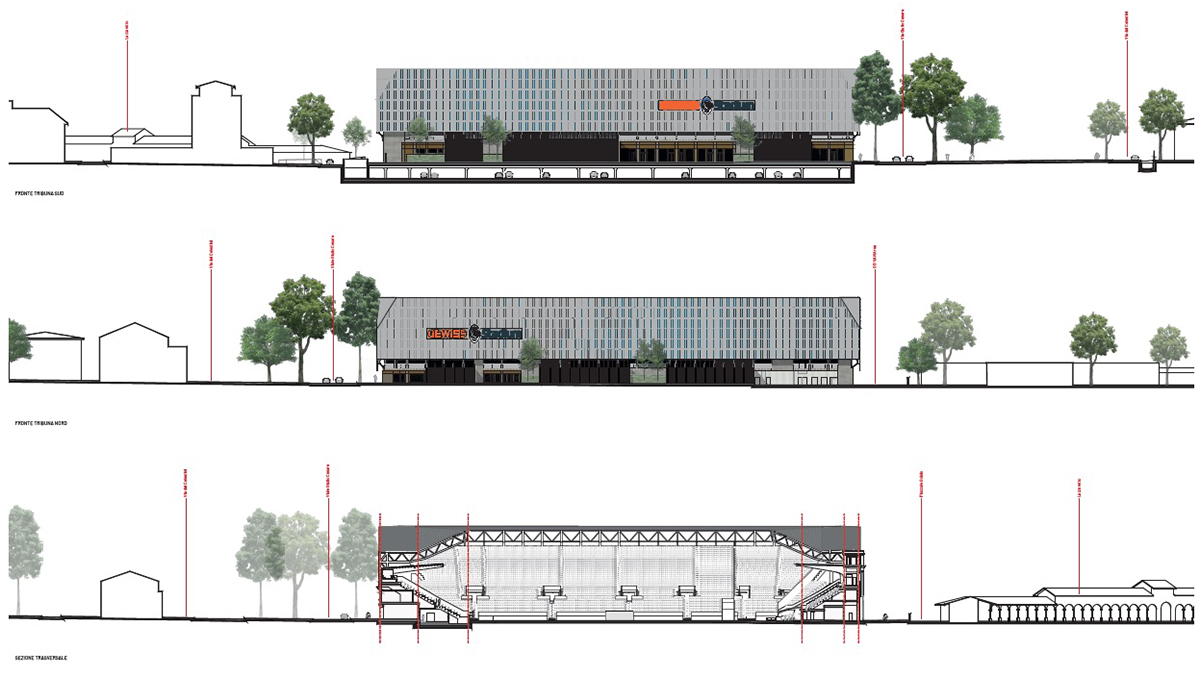
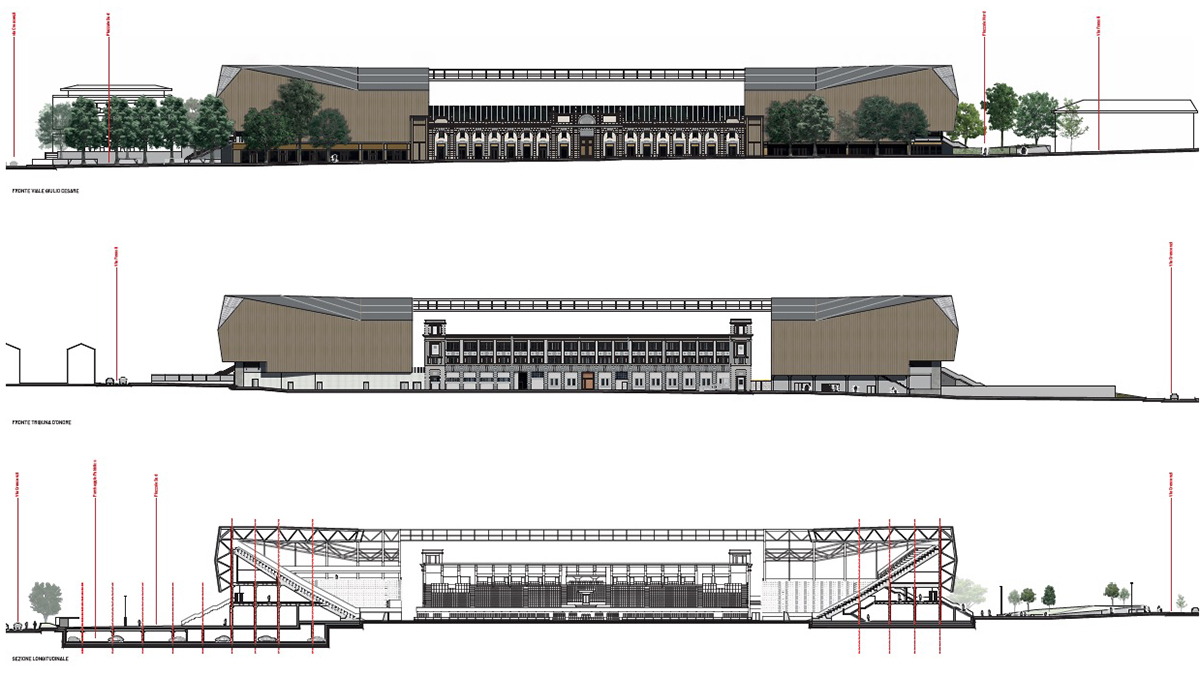
For the first time in Italy, the pre-filtering area is integrated within the stadium volume, allowing for the inclusion of commercial and service spaces that remain active beyond match days.
The project was selected for the exhibition STADI. Architettura e Mito at the MAXXI Museum in Rome (2025), as an example of reconnection between historical memory and contemporary architecture.