
Italy’s bid dossier for the 2032 European Football Championships dates back to April 2023. At the time, of the ten stadiums proposed to host the event, one was already ready, three had feasible but unstarted projects, and five could be adapted with appropriate interventions, but were not.
Bergamo and Atalanta: the Stadium in the City
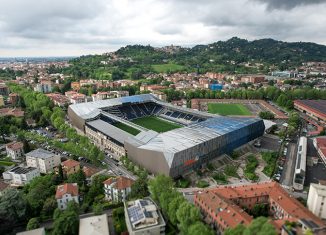
The stadium in Bergamo, home to Atalanta’s home matches, has just completed its latest transformation, while remaining in the same location it has occupied for almost a hundred years. The architects at Studio De8 designed the transformation, carried out in stages between 2019 and 2024, working on the idea of integrating the stadium with the city by transforming the boundary between the two into a permeable and lived-in edge.
Tampere (Finland): Tammela Stadium
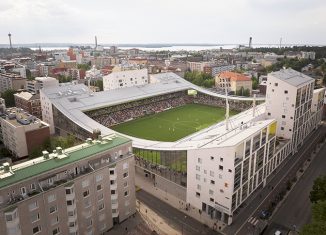
Hybrid stadium, miniature city, sports-residential lot. There are many definitions to describe the uniqueness of the Tammela Stadium, a project that represents the ability to imagine city spaces that are based on an objective of liveability and harmony with the context, and only then – as a consequence – are able to accommodate and integrate different functions in a completely natural way.

The development of the Philips Stadion and the city of Eindhoven
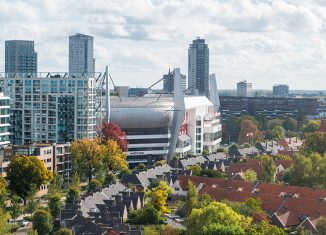
The Philips Stadion, in its evolution, reflects the architectural diversity of Eindhoven, and has transformed almost in parallel with the city, becoming today a contemporary structure with a well-defined technological soul, and perfectly integrated in what is a conurbation with just over 200,000 inhabitants. Enriched by choices increasingly oriented towards technological optimisation, such as the installation of a sound and speaker system specifically designed for this facility, and the recent introduction of the new lighting system for the grass growth of the playing field, the PSV stadium, like Eindhoven, is a virtuous example in the relationship between space and architecture.

Football Special Report: Natural and synthetic turf, training centres, lighting.

Returning to talk, as we do every year, about grass in sport, we tried to take stock of the ‘focuses’ that are of most interest, with a view to a future that awaits a change of pace about the environment. We therefore focused on football, taking advantage of Tsport’s experience with the training events organised over the past year in many different stadiums and training centres.
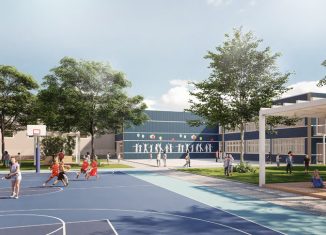
Large North American sports facilities
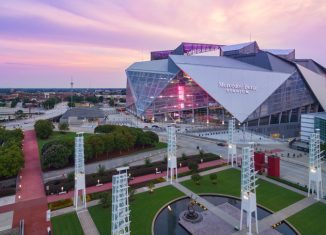
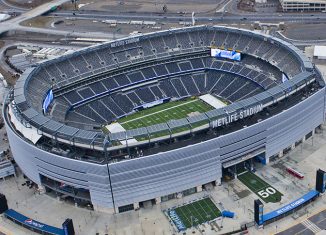
Sustainable Designing Special Report – 7. Large sports facilities designed in the USA have been among the first to chase the goals of ‘sustainability’, thanks also to the precise reference given by the LEED certification that assigns a score for each of the factors involved in the design and management of the building.
Sustainability in the new FIFA Guidelines
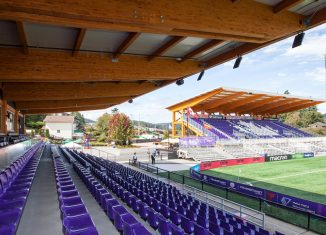
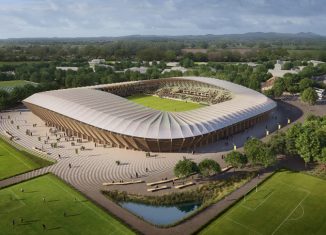
Sustainable Designing Special Report – 5. As part of an increasingly evident effort to stimulate a conscious design of the new generation of stadiums, FIFA (football’s highest international body) has dedicated an important part precisely to sustainability within the recent 2023 edition of its ‘Football Stadium Guidelines’.
Minimum Environmental Criteria for Designers
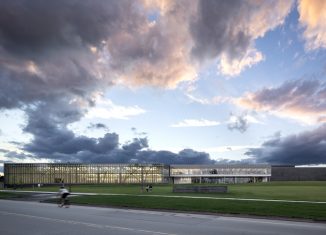
Sustainable Designing Special Report – 2. The Minimum Environmental Criteria (CAM) are the environmental requirements defined for the various phases of the purchasing process by the Public Administration, aimed at identifying the best design solution, product or service from the environmental point of view along the life cycle, taking into account market availability.
Nothing Found
It seems we can’t find what you’re looking for. Perhaps searching can help.